
Head and Spine Injury Trauma Treatment in Hyderabad
What is a head injury?
A head injury is severe, ranging from mild to severe, resulting from accidents, falls, sports injuries, or intentional harm. It can cause various symptoms and effects, depending on the severity and location of the injury. This topic is also explored concerning female-pattern hair loss.
Common types of head injuries include:
- Concussion: A concussion is a mild traumatic brain injury resulting from a head blow or jolt, causing symptoms like headache, dizziness, confusion, nausea, and light or noise sensitivity.
- Contusion: A concussion is a mild traumatic brain injury resulting from a head blow or jolt, causing symptoms like headache, dizziness, confusion, nausea, and light or noise sensitivity.
- Skull fracture: A skull fracture can cause pain, swelling, bruising, deformity, and potentially neurological symptoms if it affects the brain.
- Traumatic brain injury (TBI): TBIs, a severe form of head injury resulting from violent blows, can cause brain damage ranging from mild to severe, leading to long-term complications or disability.
- Intracranial haemorrhage: Intracranial haemorrhage, a type of skull bleeding caused by trauma or medical conditions, can result in subdural, epidural, subarachnoid, and intracerebral haemorrhage.
What is a spine injury?
Spine injuries, including vertebrae, spinal cord, and surrounding tissues, affect the spinal column. Accidents can cause falls, sports injuries, or medical conditions. The severity of these injuries can range from mild to severe, affecting the degree of disability.
Common types of spine injuries:
- Fractures: Spinal fractures are fractures in vertebrae, causing stability or instability. Causes include trauma, osteoporosis, or tumours.
- Dislocations: Dislocations, often caused by trauma, can cause spinal cord or nerve compression, causing pain, weakness, or paralysis when one or more vertebrae become displaced or misaligned.
- Spinal cord injury (SCI): Spinal cord injuries (SCIs) can cause partial or complete paralysis, loss of sensation, or impairment of bodily functions, depending on the severity and location of the injury.
- Spinal cord compression: Compression on the spinal cord, caused by factors like herniated discs, tumours, or spinal stenosis, can cause neurological symptoms and function loss.
- Spinal cord contusion: Spinal cord bruising or swelling, often caused by trauma, can lead to temporary or permanent neurological deficits, depending on the severity of the injury.
Causes of head and spine injuries:
- Traumatic accidents:
- Head: Common causes of head injuries include motor vehicle accidents, falls from heights, and sports-related injuries, which can result in direct head blows and skull and brain trauma.
- Spine: Spine injuries can result from motor vehicle accidents, height falls, and sports-related injuries, causing fractures, dislocations, or compression of the spine.
- Assaults:
- Head: Head injuries can result from intentional acts of violence, including punches, kicks, or blunt force trauma to the head.
- Spine: Violence, including stabbings or gunshot wounds, can cause severe spinal injuries, causing damage to the spinal cord or surrounding structures.
- Accidental falls:
- Head: Falls, especially in children and older adults, can cause head injuries due to impacts from stairs, ladders, or slippery surfaces.
- Spine: Falls, especially in older adults, can lead to spine injuries like vertebral fractures or spinal cord compression.
- Occupational hazards:
- Head: Certain occupations, like construction or military service, are at a higher risk of head injuries due to exposure to falls, flying objects, or explosions.
- Spine: Construction and manual labour pose a higher risk of spine injuries due to exposure to heavy machinery, lifting heavy objects, and working at heights.
- Sports injuries:
- Head: Contact sports like football, soccer, and boxing increase the risk of head injuries, including concussions and traumatic brain injuries.
- Recreational activities:
- Head: Skiing, snowboarding, cycling, and horseback riding can lead to head injuries if accidents occur.
- Spine: Engaging in activities like diving, gymnastics, or trampoline jumping can heighten the likelihood of spine injuries in the event of an accident.
- Penetrating trauma:
- Head: Sharp objects or projectiles, like bullets or glass shards, can penetrate the skull and cause traumatic brain injuries.
- Medical conditions:
- Spine: Medical conditions like osteoporosis, spinal tumours, and degenerative disc disease can weaken the spine, increasing its vulnerability to injury.
- Surgical complications:
- Spine: Spinal surgeries or medical procedures can result in complications such as nerve damage, infection, or hardware failure.
Diagnosis of head and spine injuries:
- Diagnosis of a head injury:
- Clinical assessment:
- Head: Healthcare providers conduct a comprehensive physical examination, assessing neurological function, trauma signs, and cognitive function. The Glasgow Coma Scale (GCS) is frequently used to evaluate consciousness and neurological status.
- Spine: A comprehensive physical examination is conducted to detect signs of injury, including pain, tenderness, deformity, or neurological deficits, and to evaluate spinal cord function through neurological tests.
- Imaging studies:
- CT scan (computed tomography):
- Head: This imaging test is commonly used to detect brain fractures, bleeding, and structural abnormalities, especially acute injuries, and is particularly useful for this purpose.
- Spine: CT scans offer detailed spine images, enabling the detection of fractures, spinal cord compression, and other structural issues.
- MRI (magnetic resonance imaging):
- Head: MRI offers detailed brain images, making it helpful in detecting subtle injuries or evaluating chronic conditions.
- Spine: MRI is a powerful tool for assessing soft tissues like the spinal cord, discs, and ligaments, detecting compression, disc herniation, or tumours.
- X-ray:
- Spine: X-rays are a diagnostic tool that can identify fractures, dislocations, and other bony abnormalities in the spine.
- CT scan (computed tomography):
- Specialized tests:
- Head:
- Neurological tests: Cognitive tests, reflex assessments, and sensory evaluations evaluate brain function and detect deficits.
- Electroencephalogram (EEG): The EEG is a tool that measures brain electrical activity, diagnoses seizures, and monitors brain function.
- Spine:
- Electromyography (EMG): EMG is a diagnostic tool that measures electrical activity in muscles and nerves, aiding in diagnosing nerve damage or spinal cord injuries.
- Myelography: The spinal canal is injected with contrast dye before CT or MRI studies to provide detailed images of the spinal cord and nerve roots.
- Head:
Treatment for head and spine injuries:
- Head injury:
- Observation and monitoring: Mild head injuries or concussions patients often require observation and monitoring of symptoms, rest, and avoid activities that could worsen their condition.
- Medications:
- Pain relief: Headache relief may be achieved using over-the-counter pain relievers.
- Anti-nausea medications: If nausea and vomiting symptoms are present, medications may be prescribed to alleviate them.
- Corticosteroids: Corticosteroids can mitigate brain swelling in moderate-to-severe head injury cases.
- Rest and activity modification: Patients are advised to restrict physical and cognitive activities until their symptoms improve, especially in cases of concussion.
- Neurosurgical intervention: Severe head injuries, like traumatic brain injuries, may necessitate neurosurgical intervention like craniotomy or craniectomy to alleviate brain pressure.
- Rehabilitation: Head injuries can be effectively treated through rehabilitation programs that include physical, occupational, speech, and cognitive therapy.
- Spine injury:
- Immobilization: Spine injury patients are frequently immobilized using cervical collars, backboards, or braces to prevent further movement and potential spinal cord damage.
- Medications:
- Pain relief: Spine injuries can be managed with medications like acetaminophen, ibuprofen, or prescription pain relievers.
- Muscle relaxants: These medications can be prescribed to alleviate muscle spasms and stiffness.
- Surgery: Severe spine injuries may necessitate surgery to stabilize, decompress, or repair damaged structures, including spinal fusion, laminectomy, discectomy, or vertebroplasty.
- Rehabilitation: Spine injuries require comprehensive rehabilitation, which may involve physical, occupational, or vocational therapy, to help patients regain strength, mobility, and function.
- Assistive devices: Patients may require assistive devices like wheelchairs, walkers, or orthotics to enhance mobility and independence, depending on the severity of their injury.
- Psychological support: Spine injuries can be challenging to manage, but psychological counselling or support groups can help patients and their families address their emotional and mental health needs.
Rehabilitation for head and spine injuries:
- Physical therapy (PT):
- Head: Physical therapy (PT) focuses on enhancing strength, balance, coordination, and mobility through exercises like stretching, strengthening, and balance training and also helps address physical impairments from head injuries.
- Spine: Spine rehabilitation involves strengthening muscles, improving flexibility, and restoring functional mobility through core strengthening, stretching, and proprioceptive training while teaching safe transferring, walking, and navigation techniques.
- Occupational therapy (OT):
- Head: Occupational therapy (OT) aids patients in relearning daily living activities and improving fine motor skills, cognitive function, and problem-solving abilities through adaptive equipment and strategies.
- Spine: Occupational therapy (OT) aids patients in regaining independence in daily living activities, using adaptive techniques, energy conservation strategies, and assistive devices.
- Speech therapy:
- Head: Speech therapy aids individuals with head injury-related speech and language issues, including aphasia or dysarthria, cognitive-communication deficits, and swallowing difficulties.
- Cognitive rehabilitation:
- Head: The program addresses cognitive impairments like memory issues, attention deficits, and executive dysfunction through rehabilitation techniques like mental exercises, memory aids, and attention and concentration strategies.
- Visual rehabilitation:
- Head: Visual rehabilitation addresses head injury-related visual disturbances like blurred vision, double vision, or visual field deficits through exercises, specialized therapies, or visual aids.
- Wheelchair seating and mobility training:
- Spine: Specialized assessment and training are provided for individuals with spinal cord injuries requiring wheelchair mobility to ensure proper fit, positioning, and mobility skills.
- Pain management:
- Spine: Spine injuries can be managed using therapeutic modalities, manual therapy, and relaxation techniques to alleviate pain.
- Psychological support:
- Spine: Spine injuries can cause significant physical, emotional, and lifestyle changes, necessitating rehabilitation strategies like psychological counselling, support groups, and education to manage emotional well-being and adjustment issues.
- Community reintegration:
- Spine: Rehabilitation aids individuals in reintegrating into their communities through vocational training, educational support, and social reintegration programs.
Prognosis of Head Injuries and Spinal Cord Injuries:
- Mild head injuries generally recover with rest and symptom management within days to weeks.
- Persistent symptoms may persist, lasting weeks or months.
- Repeat concussions increase the risk of long-term complications like post-concussion syndrome, or CTE.
- Spinal cord injuries’ prognosis depends on severity and location.
- Incomplete injuries may allow partial recovery, while complete injuries result in permanent paralysis and disability.
- Factors affecting prognosis include other injuries, age, overall health, and medical treatment timeliness and effectiveness.
Head and spine injuries are severe conditions that necessitate immediate medical attention and comprehensive care to minimize complications and optimize recovery, with prevention efforts being crucial.
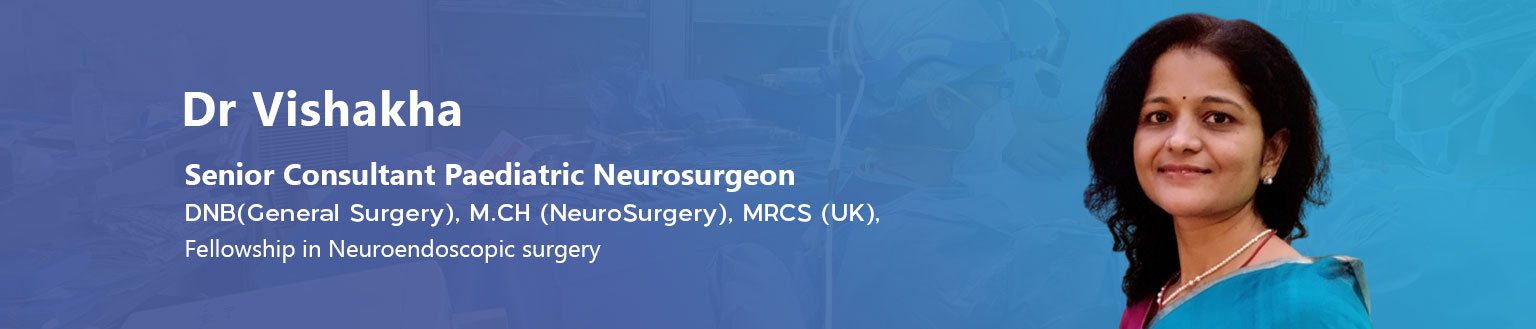
Proficiency of Dr Vishaka:
- Hydrocephalus (increased fluid in the brain) Treatment:
Endoscopic third ventriculostomy and CSF diversion (VP shunt) , neuroendoscopic
procedures for complex hydrocephalus. - Craniosynostosis (abnormal head shape due to untimely cranial sutures fusion) :
- Treatment –
Helmet therapy , endoscopic and open surgery. - Spinal dysraphisms(Spina Bifida)-
(spinal abnormalities present since birth) – surgical repair - Encephalocele repair surgery.
- Vascular and stroke surgeries:
revascularization surgeries for moya moya disease, emergency surgery for stroke - Pediatric brain and spine tumour surgeries.
- Pediatric brain and spine infection surgeries:
Endoscopic and open surgeries for brain and spine infections. - Pediatric traumatic brain and spinal injury.
- Antenatal counselling for congenital fatal neurosurgical conditions.
Dr Vishakha Karpe M.B.B.S, DNB (AIIMS) New Delhi, M.Ch (IPGMER SSKM) Member of “The Royal College of Surgeons, Edinburgh” (U.K.) is a highly competent and one of the best pediatric neurosurgeons in Hyderabad, Telangana with 13 years of experience, is among the topmost pediatric neurosurgeons in the Rainbow group of hospitals at Banjara Hills and Hyder Nagar.