
What is spine surgery?
Spine surgery is a procedure done to correct a structural problem in the spine that is pressing on the spinal cord or the nerve roots. It is advised when pain, weakness, or numbness does not improve with medicines, physiotherapy, and rest. Most spine problems settle with conservative treatment, and surgery is considered only for a small number of patients. Modern spine surgery in Hyderabad is done through small incisions in most cases, which reduces blood loss, hospital stay, and recovery time.
Who is a spine surgeon?
A spine surgeon is a neurosurgeon or an orthopaedic surgeon trained to diagnose and treat conditions of the spinal column and the spinal cord. A neurosurgically trained spinal cord specialist works directly on the nerves and the spinal cord, which is important in cases of nerve compression, myelopathy, spinal tumours, and spinal cord injury. The role of the spine surgeon is to identify the exact cause of the pain and to decide whether surgery is required at all.
Conditions treated with spine surgery
Neck (cervical) conditions
- Cervical disc herniation: A disc in the neck bulges out and presses on a nerve root, causing neck pain with radiating pain, tingling, or weakness in the arm and hand.
- Cervical canal stenosis: Narrowing of the canal in the neck reduces the space available for the spinal cord and nerve roots.
- Cervical spondylotic myelopathy: Compression of the spinal cord in the neck causes clumsiness of the hands, difficulty with buttons and writing, and imbalance while walking.
- Cervical instability: Excess movement between two vertebrae in the neck, seen on bending X-rays, causing pain and nerve symptoms.
Lower back (lumbar) conditions
- Lumbar disc herniation: A disc in the lower back presses on the nerve root and causes sciatica, which is pain radiating from the lower back down the leg.
- Lumbar canal stenosis: Narrowing of the canal causes pain and heaviness in the legs after walking a short distance, which improves on sitting or bending forward.
- Spondylolisthesis: One vertebra slips forward over the vertebra below it, causing back pain, leg pain, and instability that may need stabilisation.
- Degenerative disc disease: Wear and tear of the discs reduces the cushioning between the vertebrae and causes chronic back pain with stiffness.
Conditions affecting any level of the spine
- Spinal trauma and fractures: Accidents and falls can make the spine unstable and injure the spinal cord. These may need urgent fixation.
- Osteoporotic compression fractures: Weak bone in elderly patients can collapse and cause sudden severe back pain, often without any injury.
- Spinal tumours: Tumours inside or around the spinal cord cause progressive weakness, numbness, and back pain that is worse at night or at rest.
- Spinal infections: Spinal tuberculosis and pyogenic spondylodiscitis can destroy the vertebra and compress the spinal cord. Surgery is needed when there is deformity, instability, or neurological deficit.
- Recurrent disc and failed back surgery: Pain that returns after a previous spine surgery needs re-evaluation to find whether it is due to recurrent disc, scar tissue, or instability.
When to consult a spinal cord specialist
Symptoms that need a planned consultation
- Persistent pain: Neck or back pain continuing beyond six weeks despite medicines, physiotherapy, and rest.
- Radiating pain: Pain travelling down the arm or the leg in a definite line, often with tingling or a burning sensation.
- Numbness: Loss of sensation in a specific area of the arm, hand, leg, or foot.
- Reduced walking distance: Heaviness or pain in the legs that appears after walking a fixed distance and settles on sitting.
- Loss of hand function: Difficulty in buttoning a shirt, holding small objects, or writing.
- Recurrence after previous surgery: Return of the same or new pain after an earlier spine operation.
Symptoms that need emergency consultation
- Loss of bladder or bowel control: New difficulty in passing urine, or loss of control over urine or stool.
- Saddle numbness: Loss of sensation around the inner thighs, buttocks, or perineal region.
- Rapidly increasing weakness: Weakness in one or both legs that is getting worse over hours or days, including dragging of the foot.
- Pain with fever or weight loss: Severe back pain along with fever, night sweats, or unexplained weight loss.
- Pain after a major injury: Neck or back pain following a road accident or a fall, particularly in elderly patients.
Diagnosis before spine surgery
- Medical history: The doctor will ask about the site of pain, duration, radiation, walking distance, treatment already taken, and any bladder or bowel complaints.
- Neurological examination: Muscle power, sensation, reflexes, and gait are checked to find out which nerve root or level is affected.
- MRI scan: MRI is the main investigation before spine surgery. It shows the discs, nerve roots, spinal cord, and soft tissues clearly.
- X-ray: Standing and bending X-rays show alignment and detect instability that an MRI may not reveal.
- CT scan: CT gives detail of the bone and is used for fracture assessment and for planning screw placement.
- Nerve conduction studies: EMG and nerve conduction studies are used when the symptoms and the MRI findings do not match, or to rule out nerve problems outside the spine.
- Bone density test: A DEXA scan is advised in elderly patients before implants are used, to check the strength of the bone.
Types of spine surgery
Endoscopic spine surgery
Endoscopic spine surgery is done through a small opening of about one centimetre using a thin endoscope with a camera and light. The surgeon reaches the disc and the nerve root directly and removes only the portion that is pressing on the nerve. The muscles are not cut or stripped from the bone. Selected cases can be done under local anaesthesia with sedation, which is useful for patients with heart or lung problems who cannot tolerate general anaesthesia. Endoscopic spine surgery is suitable for single level disc herniation, foraminal disc prolapse, lateral recess stenosis, and some recurrent disc cases.
Minimally invasive spine surgery
Minimally invasive spine surgery is done through small tubular retractors under a microscope. The muscle fibres are separated instead of being cut, which reduces blood loss and post-operative pain. Microdiscectomy, unilateral laminotomy for bilateral decompression, and minimally invasive fusion are done using this approach.
Spinal fusion and stabilisation
Fusion is advised when the spine is unstable, when there is slippage of a vertebra, or when a wide decompression would make the spine unstable. Screws, rods, and a cage are used to hold the segment in position until the bone unites. This can be done through the minimally invasive route using percutaneous screws in suitable patients.
Cervical spine surgery
Anterior cervical discectomy and fusion, cervical disc replacement, and posterior decompression are done for cervical disc prolapse and cervical myelopathy. The approach depends on the level involved and the number of segments affected.
Vertebroplasty and kyphoplasty
Bone cement is injected into a collapsed vertebra through a needle to relieve pain in osteoporotic compression fractures. This is a day care procedure in most patients.
Open spine surgery
Open surgery is still required for multilevel stenosis, deformity correction, most spinal tumours, unstable fractures, and extensive infection. The approach is selected according to the disease and not according to the size of the incision.
Benefits of minimally invasive spine surgery
- Smaller incision: The incision is between one and two centimetres in most procedures, which results in a smaller scar.
- Less blood loss: Studies comparing minimally invasive fusion with open fusion have shown significantly lower blood loss and a lower need for blood transfusion.
- Shorter hospital stay: Endoscopic discectomy is often a day care procedure. Minimally invasive fusion usually needs a stay of two to four days.
- Early mobilisation: Most patients walk on the same day after endoscopic surgery and on the first day after fusion.
- Less muscle damage: The back muscles are not stripped from the bone, which reduces post-operative back pain and stiffness.
- Comparable results: A randomised trial published in the BMJ in 2022, which included 613 patients with sciatica, found that endoscopic discectomy gave leg pain relief comparable to open microdiscectomy at one year, with a repeat surgery rate of five percent compared with six percent in the open group.
- Point to note: Minimally invasive fusion involves longer use of the C-arm during surgery and therefore more radiation exposure. It also requires specific surgical training and experience.
Recovery after spine surgery
- Walking: Walking is started on the same day after endoscopic surgery and on the first day after fusion, usually with support.
- Return to desk work: One to two weeks after endoscopic surgery and four to six weeks after fusion.
- Return to physical work: Four to six weeks after endoscopic surgery and around three months after fusion.
- Driving: Two to three weeks after endoscopic surgery and around six weeks after fusion.
- Nerve recovery: Pain relief is usually immediate once the pressure on the nerve is removed. Numbness and weakness take longer and may improve over several weeks to months. If the nerve has been compressed for a long time, some weakness may remain permanently. This is the reason why increasing weakness should not be ignored or observed for long.
Precautions to be taken after spine surgery
- Follow physiotherapy: Core strengthening and back muscle exercises must be started as advised and continued after recovery.
- Avoid heavy lifting: Lifting weights and bending forward repeatedly should be avoided during the healing period.
- Maintain correct posture: Sit with back support, keep the screen at eye level, and avoid long hours of forward bending.
- Take breaks: Avoid sitting or standing in one position for long. Get up and move at regular intervals.
- Stop smoking: Nicotine reduces blood supply to the bone and delays fusion. Smoking must be stopped before and after fusion surgery.
- Control weight and sugar: Excess body weight increases the load on the spine, and uncontrolled diabetes delays wound healing.
- Attend follow up: Regular follow up with the spine surgeon is necessary to confirm that healing and fusion are progressing as expected.
Spine problems can affect walking, working, and sleep, but most of them can be treated without surgery when they are diagnosed early and managed correctly. Surgery is advised only when there is a clear structural cause that matches the clinical findings, or when there is nerve compression that is getting worse. Consultation with a qualified spine surgeon is important for an accurate diagnosis and a treatment plan suited to your condition.
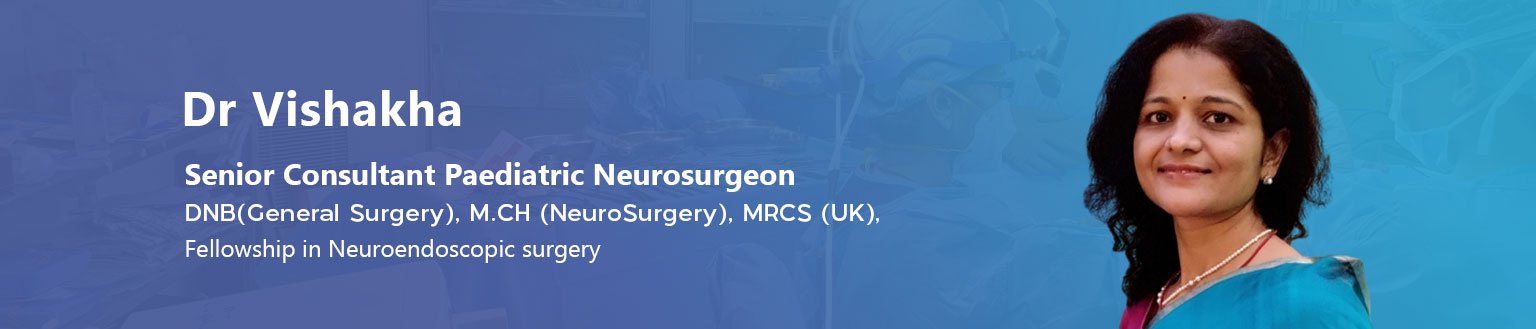
Proficiency of Dr Vishaka:
- Hydrocephalus (increased fluid in the brain) Treatment:
Endoscopic third ventriculostomy and CSF diversion (VP shunt) , neuroendoscopic procedures for complex hydrocephalus. - Craniosynostosis (abnormal head shape due to untimely cranial sutures fusion) :
- Treatment – Helmet therapy , endoscopic and open surgery.
- Spinal dysraphisms(Spina Bifida)-
(spinal abnormalities present since birth) – surgical repair - Encephalocele repair surgery.
- Vascular and stroke surgeries:
revascularization surgeries for moya moya disease, emergency surgery for stroke - Pediatric brain and spine tumour surgeries.
- Pediatric brain and spine infection surgeries:
Endoscopic and open surgeries for brain and spine infections. - Pediatric traumatic brain and spinal injury.
- Antenatal counselling for congenital fatal neurosurgical conditions.
Dr Vishakha Karpe M.B.B.S, DNB (AIIMS) New Delhi, M.Ch (IPGMER SSKM) Member of “The Royal College of Surgeons, Edinburgh” (U.K.) is a highly competent and one of the best pediatric neurosurgeons in Hyderabad, Telangana with 13 years of experience, is among the topmost pediatric neurosurgeons in the Rainbow group of hospitals at Banjara Hills and Hyder Nagar.