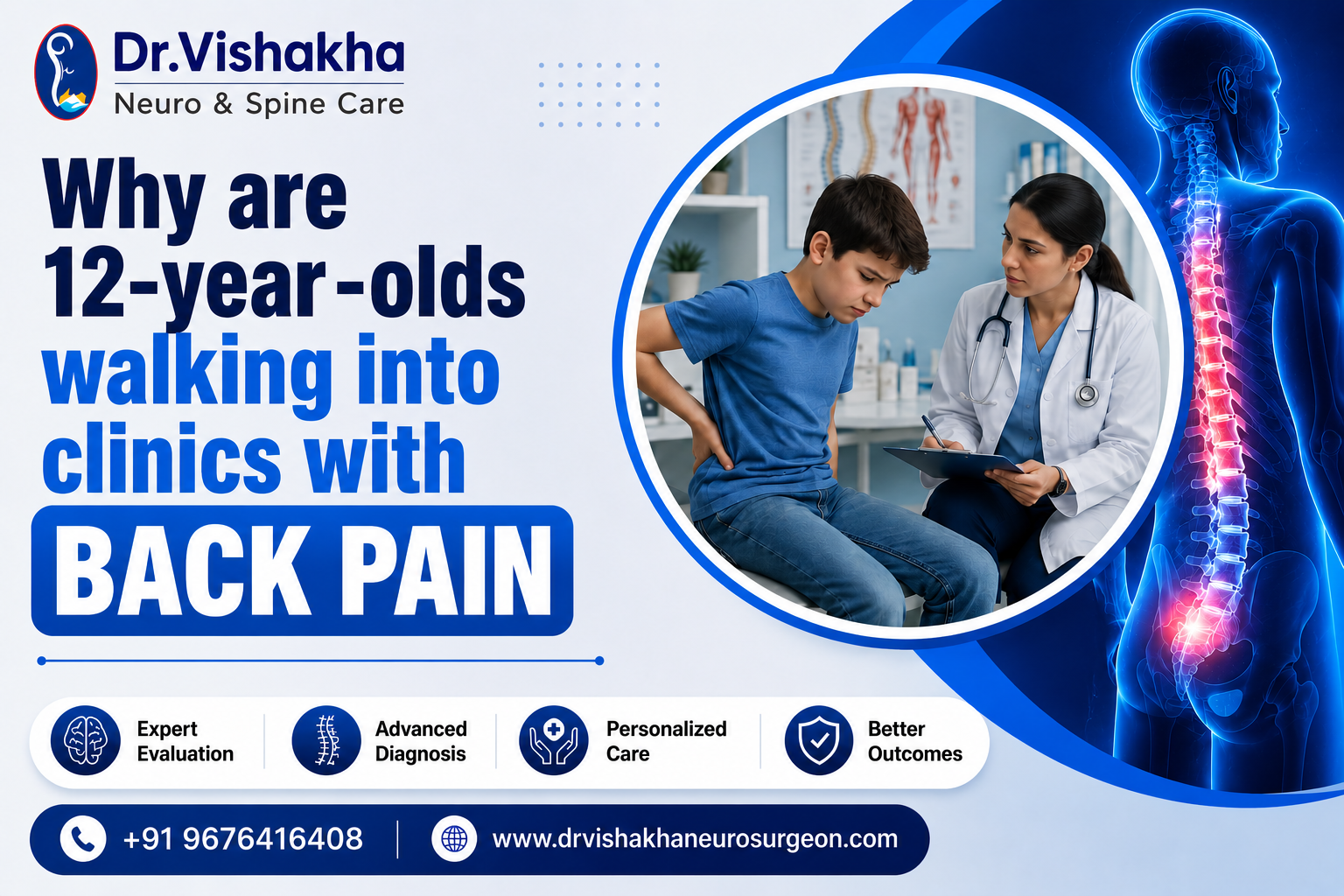
Most kids this age complain of a sore back for ordinary reasons: a bag stuffed with textbooks, too many hours curled over a phone, or a growth spurt that stretched them out overnight. In most cases, back pain in children aged 12 years is mechanical and settles with rest, better posture, and a few simple exercises. Sometimes it points to a curve in the spine, which is why doctors check for scoliosis. Surgery is rare. But if the pain lasts more than two weeks, wakes your child at night, or comes with fever or leg weakness, don’t wait, see a specialist.
Understanding Back Pain in Children
Not long ago, a sore back was something you’d expect from an adult, not a child. That has changed. Clinics now see numerous twelve-year-olds with aching spines, and most of the time, the cause is something in their daily routine rather than anything to be concerned about. Understanding what’s behind it takes most of the worry away.
Causes of Lower Back Pain in Children
Nine times out of ten, the pain is mechanicoriginateseaning it comes from the way the body is used rather than any disease. The common causes of back pain in children aged 12 years include:
- The school bag: Packed with books and worn on one shoulder, it pulls the spine off-centre for hours a day.
- Screens: Children hunch over a phone in a position the spine dislikes, and stay there far longer than they notice.
- Growth: Between eleven and thirteen, bones can grow faster than the muscles around them, leaving a child stiff and sore.
- Weak core muscles: Long hours of sitting mean the muscles that support the spine never grow strong.
- Sport played too hard: A back strain from cricket, gymnastics, or football appears when a child trains beyond what their body is ready for.
The cause parents miss most is posture. A lot of the back pain that children carry begins at a study desk that’s the wrong height, or on the bed, where homework turns into an hour spent lying at an awkward angle.
Types of Lower Back Pain in Children
Not every ache is the same. Broadly, they fall into four groups:
- Muscle pain — everyday soreness from strain or slouching. The most common by far.
- Structural pain — linked to the shape of the spine, such as scoliosis, a sideways curve some children develop as they grow.
- Inflammatory pain — worse at night and stiff in the morning.
- Referred pain — where the real problem lies elsewhere in the body but is felt in the back.
Which Children Are Prone to Lower Back Pain
Some children are simply more at risk. Those carrying extra weight, spending most of the day on a screen, training hard in a sport, or with a family history of back trouble are more likely to feel it. Back pain in growing children often flares during a rapid spurt, when strength and balance haven’t caught up with a suddenly taller frame. Girls in early puberty deserve a closer watch, as scoliosis can develop quietly during these years.
Diagnosis of Lower Back Pain in Kids
Here’s the reassuring part: the back pain in adolescents that clinics usually see is harmless and clears up on its own. A proper check-up still matters, though, because it catches the rare case that needs more.
A visit usually goes in three steps:
- The questions. When did it start? Does it hurt at night? Any falls or heavy training recently? The answers often point straight to the cause.
- The examination. The doctor watches how your child stands, walks, and bends forward, looking for any lean or curve that suggests scoliosis.
- Imaging, only if needed. An X-ray or MRI is used only when history suggests more than a passing strain.
A few signs call for a closer look: pain that wakes a child at night, an unexplained fever, weakness in the legs, or an ache that won’t fade. When teen back pain appears with any of these, see a specialist without delay.
Treatment Options
For most families, the plan is gentle, and surgery is never the first step. Here’s how the common options compare:
| Treatment | Best For | What It Involves | How Long Does It Take |
| Rest & small changes | Mild muscle strain | Lighter bag, screen breaks, better sitting | A few days to 2 weeks |
| Physiotherapy | Posture pain, weak muscles | Guided stretches and strengthening | 4–8 weeks |
| Bracing | A growing curve from scoliosis | A custom brace to slow the curve | Months, with check-ups |
| Pain care | Ongoing inflammatory pain | Medication and targeted therapy | As advised |
| Surgery | Serious spine or nerve problems | A small, precise operation | Selected cases only |
The most common problem, poor posture, sits at the top and needs the simplest fix. A better chair, a lighter bag, and a few daily stretches are often all it takes.
Advanced Treatments
When simple steps aren’t enough, modern spine care takes over. Keyhole surgery uses very small cuts, which means less pain and a faster return to school. If a sports back injury is pressing on a nerve and won’t settle, a small, targeted procedure can bring quick relief. And for a curving spine, today’s correction surgery is far gentler than it once was, with many children walking within a few days. It’s rarely needed at this age, but when it is, the difference is enormous.
Results & Recovery Timeline
Every parent asks the same thing: how long? The answer is a good one.
- A simple muscle strain eases within one to two weeks, once the cause is removed.
- Posture-related pain improves over four to eight weeks with exercises and better habits.
- A braced spine curve is managed over several months, with regular check-ups.
- After surgery, most children return to light school routines within weeks and to full activity over a few months.
Almost every child recovers completely and gets straight back to running, playing, and being themselves.
Frequently Asked Questions
Is back pain in a 12-year-old normal?
A little soreness after a busy day is common and usually nothing to worry about. Pain lasting more than two weeks, or waking your child at night, needs a check-up.
Can a heavy school bag really cause this?
Yes, and it often does. A bag heavier than about ten to fifteen per cent of your child’s body weight is one of the most common reasons for back pain in children.
How do I know if it’s scoliosis?
Look for uneven shoulders, a tilted waist, or one shoulder blade sticking out more than the other. If you spot these, a specialist can confirm whether scoliosis is the cause.
Does my teen need a scan straight away?
Usually not. Most teen back pain clears without any scan. Imaging is saved for cases with warning signs like weakness, fever, or night pain.
Can better posture alone fix the problem?
Very often, yes. Fixing how a child sits, along with a few daily stretches, sorts out plenty of cases without any medicine.
Is surgery common for a young child’s back pain?
No, it’s rare. Back pain in young children almost always improves with simple care, and surgery is a last resort.
When should I see a specialist urgently?
Quickly, if the pain comes with fever, numbness, trouble walking, or hasn’t eased within two weeks.
About Dr Vishakha- The top pediatric neurosurgeon in Hyderabad
Dr Vishakha Basavraj Karpe is a highly skilled senior consultant at Rainbow Children’s Hospital in Banjara Hills and Hyderabad. She is known for her comprehensive care approach and is one of the few dedicated leading paediatric neurosurgeons in the city and India with over ten years of extensive experience in pediatric neurosurgery.
Her expertise includes treating hydrocephalus, spinal dysraphism, craniosynostosis, paediatric brain infections, brain and spine tumours and stroke surgery. She has a special interest in craniosynostosis surgery, which is done only in very few centres in India.
Proficiency of Dr Vishakha – Neurosurgeries Expertise
Hydrocephalus (increased fluid in the brain): The procedure involves an endoscopic third ventriculostomy and CSF diversion (VP shunt) to treat complex hydrocephalus.
Craniosynostosis (abnormal head shape due to premature cranial suture fusion) surgeries: Helmet therapy is a technique that is used in both endoscopic and open surgery.
Spinal dysraphisms(Spina Bifida)– (spinal abnormalities present by birth) – surgical repair
Encephalocele repair surgery.
Vascular conditions and stroke surgeries: revascularisation surgeries for moyamoya disease.
Pediatric brain and spine tumour surgeries.
Pediatric brain and spine infection surgeries: Endoscopic and open surgeries for brain and spine infections.
Pediatric traumatic brain and spinal injury.
Antenatal counselling for congenital fatal neurosurgical conditions.
Conclusion
Watching your child ache the way an adult might is unsettling. But in most cases, back pain in children aged 12 years has a clear and gentle fix. Lighten the bag, correct how they sit, build a little strength, and keep an eye on the warning signs. When the ache lingers or something feels off, the right specialist is the difference between weeks of worry and a quick, full recovery.
Internal Linking
Related treatment pages: Neck Pain and Back Pain · Spine Surgery · Spina Bifida
Other blog posts: Spine Health from Childhood Onwards · Life After Neurosurgery for Young Patients
Book a Consultation
Don’t let a small ache turn into a big worry. Book a consultation with Dr Vishakha Karpe, a trusted pediatric neurosurgeon in Hyderabad.
📞 Call +91 8618978597 or +91 9676416408
🌐 Visit drvishakhaneurosurgeon.com to book an appointment.