Most headaches in children are harmless and typically caused by dehydration, poor sleep, or prolonged screen time. However, certain patterns deserve attention: headaches that wake a child at night, worsen with coughing or bending, or come with vomiting, vision changes, or unusual clumsiness. These can indicate elevated pressure inside the skull or other neurological conditions. Recognising typical headache symptoms in children helps parents decide when rest is enough and when a specialist opinion is needed. If a headache is severe, recurring, or paired with neurological signs, early evaluation offers the fastest route to reassurance and, where needed, treatment.
Understanding the Condition
A child’s brain and skull are still developing, and headaches are among the most common reasons parents bring their child in for a check-up. The tricky part is that pain itself does not tell you much. A mild headache and a dangerous one can start out looking almost identical, which is exactly why it helps to understand what typically causes headaches in children, how the different types present, and which signs set the more serious cases apart. That is what the rest of this article walks through.
Causes – Why do these happen?
The causes of headaches in children are usually simple and everyday. Common triggers include:
- Dehydration, particularly after outdoor play or physical activity without enough water breaks.
- Poor sleep, where irregular bedtimes or late-night screen use disturb normal rest.
- Eye strain, from long hours spent reading or looking at digital screens.
- Skipped meals, which can lower blood sugar and bring on a headache.
- Emotional stress, linked to exams, friendships, or changes at home.
- Sinus congestion or a cold, where blocked sinuses cause pain that radiates to the head.
- Poor posture, especially from heavy school bags pulling on the neck and shoulders.
Understanding these everyday causes of headaches in children reassures most parents, since the majority of episodes are short-lived and resolve with simple care. In rare cases, however, the reason lies deeper, inside the skull itself, where raised pressure, a vascular issue, or an underlying growth can begin as an ordinary-looking headache.
Types
Headaches in children generally fall into recognisable categories:
- Tension headaches, which feel like a dull, band-like pressure around the forehead, usually ease with rest.
- Migraines in children tend to be throbbing, often one-sided, and frequently paired with nausea or sensitivity to light. Some children also experience an aura, a set of visual or sensory changes, before the pain begins.
- Secondary headaches are linked to fever, sinus infection, or a recent injury.
- Chronic or progressive headaches, which gradually worsen over days or weeks rather than settle down.
Migraines in children can be particularly disruptive, often keeping a child home from school, but they are manageable once identified and treated appropriately.
Conditions we often see
Within paediatric neurosurgery, several headache-related conditions appear with some regularity:
- Hydrocephalus: a build-up of fluid within the brain’s ventricles, raising pressure inside the skull. With early diagnosis, outcomes are generally very good.
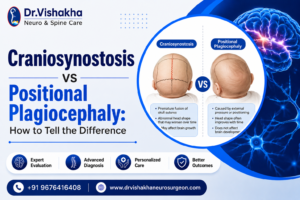
- Craniosynostosis-related pressure: seen in infants whose skull sutures fuse prematurely, occasionally restricting brain growth.
- Brain tumours or cysts: uncommon in children, but a persistent or worsening headache is often one of the earliest signs.
- Chiari malformation: where brain tissue extends slightly into the spinal canal, sometimes causing headaches that worsen with coughing or straining.
- Post-traumatic headache: following a fall, sports injury, or head trauma.
- Idiopathic intracranial hypertension: raised pressure around the brain without an obvious cause.
These conditions are relatively rare, but they explain why a severe headache in children that develops suddenly, or feels unlike anything experienced before, should be assessed by a specialist rather than managed at home.
Recognising Headache Symptoms in Children That Need Attention
Certain headache symptoms in children call for prompt medical review. These include headaches that wake a child from sleep, pain that worsens on lying down or straining, and vomiting, especially in the morning without other stomach illness. Additional signs include sudden clumsiness, blurred or double vision, unusual irritability or confusion, a headache in a child under three years old, or one described as the worst pain they have ever felt.
If any of these symptoms accompany a headache, it moves from an ordinary complaint to a severe headache in children requiring urgent specialist input.
Questions to Ask Your Specialist
Walking into a consultation can feel overwhelming, so it helps to have a few clear questions ready:
- Is this headache pattern typical for my child’s age, or is it unusual?
- Do we need imaging, such as an MRI or CT scan, or is a clinical examination enough for now?
- Could this be linked to vision, sinuses, or a structural cause?
- What symptoms should prompt an immediate visit to the emergency room?
- Is this likely to be a one-time episode or a recurring issue we should track?
- Are there simple lifestyle changes, such as sleep or screen time adjustments, worth trying first?
Frequently Asked Questions
Q: Are headaches in children usually serious?
No. Most cases are linked to dehydration, tiredness, or stress. Concern is warranted mainly when red-flag symptoms accompany the pain.
Q: What is the difference between migraines in children and tension headaches?
Tension headaches feel like steady pressure on both sides of the head. Migraines in children are typically throbbing, often one-sided, and paired with nausea or light sensitivity.
Q: Can screen time really cause headaches?
Yes. Long, close-range screen exposure strains the eyes and disrupts sleep, both of which are common triggers.
Q: At what age should I worry more about headaches?
Children under three rarely complain of headaches without a genuine reason, so this age group deserves closer attention.
Q: Does every headache need a brain scan?
No. Imaging is generally reserved for cases with red-flag symptoms, unusual patterns, or findings on a neurological examination.
Q: What is the first step if my child’s headache seems unusual?
Note the timing, triggers, and any accompanying symptoms, then consult a paediatric specialist rather than relying on self-diagnosis.
Q: How common are pediatric headaches?
Pediatric headaches are among the most frequent complaints seen in general paediatric practice, and the vast majority are mild and short-lived.
Proficiency of Dr Vishakha – Neurosurgeries Expertise
Hydrocephalus (increased fluid in the brain): The procedure involves an endoscopic third ventriculostomy and CSF diversion (VP shunt) to treat complex hydrocephalus.
Craniosynostosis (abnormal head shape due to premature cranial suture fusion) surgeries: Helmet therapy is a technique that is used in both endoscopic and open surgery.
Spinal dysraphisms(Spina Bifida)– (spinal abnormalities present by birth) – surgical repair
Encephalocele repair surgery.
Vascular conditions and stroke surgeries: revascularisation surgeries for moyamoya disease.
Pediatric brain and spine tumour surgeries.
Pediatric brain and spine infection surgeries: Endoscopic and open surgeries for brain and spine infections.
Pediatric traumatic brain and spinal injury.
Antenatal counselling for congenital fatal neurosurgical conditions.
Conclusion
Headaches in children are, in most cases, a passing part of growing up, tied to simple triggers like dehydration, tiredness, or stress. However, certain symptoms and patterns call for a closer look, and recognising them early makes all the difference. Trust your instincts as a parent. If something about your child’s headache feels different or concerning, a timely consultation offers clarity and peace of mind.
Related treatment pages:
- Hydrocephalus: https://drvishakhaneurosurgeon.com/hydrocephalus/
- Craniosynostosis: https://drvishakhaneurosurgeon.com/craniosynostosis/
- Brain and Spine Tumours: https://drvishakhaneurosurgeon.com/brain-and-spine-tumors/
Other blog posts:
- Is your baby’s soft spot normal? Here’s how to tell: https://drvishakhaneurosurgeon.com/is-your-babys-soft-spot-normal-heres-how-to-tell-dr-vishakha-explains/
- Brain or spine issues spotted on your anomaly scan?: https://drvishakhaneurosurgeon.com/brain-or-spine-issues-spotted-on-your-anomaly-scan-please-take-a-moment-to-read-this/
Book a Consultation
If your child’s headaches feel unusual, frequent, or worrying, do not wait for certainty. Book a consultation with Dr Vishakha Karpe, a trusted pediatric neurosurgeon in Hyderabad.
📞 Call +91 8618978597 or +91 9676416408
🌐 Visit drvishakhaneurosurgeon.com to book an appointment.