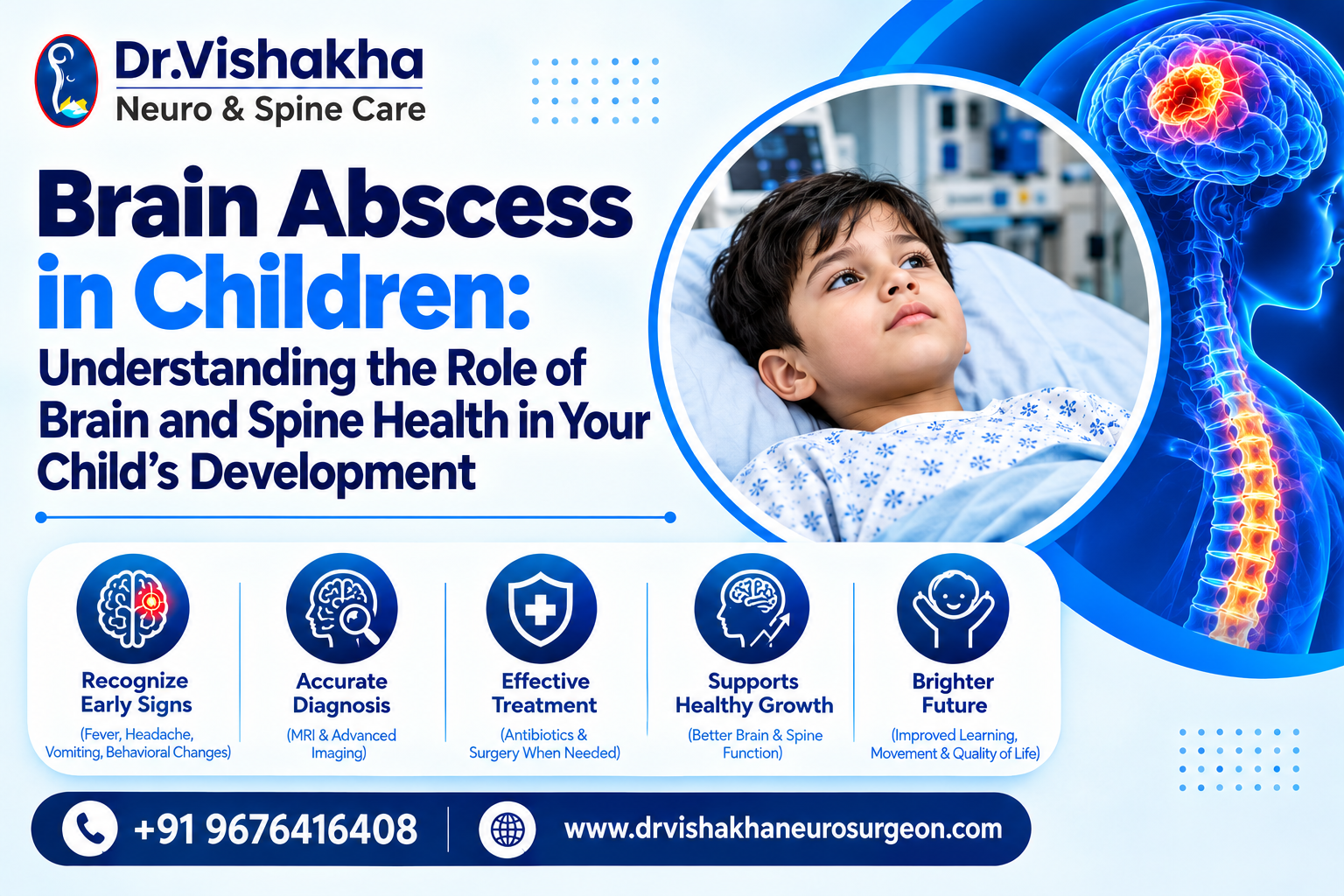
A child’s developmental milestones, from the first smile to the first steps, reflect healthy growth of the brain and spinal cord. When an infection affects the brain, these milestones can be disrupted, sometimes suddenly. A brain abscess in children is one such condition. It is uncommon but serious, and recognising it early makes a significant difference to recovery.
This article explains what a brain abscess is, why it happens, the warning signs to look for, and how it is diagnosed and treated.
What Is Brain Abscess in Children?
A brain abscess is a collection of pus that forms in one or more areas of the brain as a result of infection. Because the skull cannot expand, the growing abscess places pressure on surrounding brain tissue.
This pressure can interfere with how the brain and spinal cord function. It can affect movement, speech, alertness and, in severe cases, breathing.
A pediatric brain abscess is a medical emergency. It can be life-threatening and requires immediate treatment. With timely care, however, many children make a good recovery.
What Are the Brain Abscess Causes?
Most brain abscesses are caused by bacteria. Fungal infections are less common and occur mainly in children with a weakened immune system.
Infection can reach the brain in three main ways:
| Route of infection | How it occurs | Common sources |
| Spread from a nearby area | Infection extends from structures close to the brain | Ear, sinus or dental infections |
| Spread through the bloodstream | Organisms travel from another part of the body | Lung or chest infections, heart infection (endocarditis), meningitis |
| Direct entry | Organisms enter through an injury | Penetrating head wounds or skull fractures |
Understanding these brain abscess causes shows why ear, sinus and dental infections should always be treated completely.
Which Children Are at Risk?
Any child can develop a brain infection in children, but the risk is higher in those with:
- congenital heart disease
- meningitis
- chronic ear or sinus infections
- dental or jaw infections
- infections of the face or scalp
- head injury or skull fracture
- diabetes
- skull traction
- an infected cerebrospinal fluid (CSF) shunt
- a weakened immune system, for example due to HIV
Having a risk factor does not mean a child will develop a brain abscess. It does mean parents should watch more closely for symptoms.
Brain Abscess Symptoms in Children
Most symptoms result from increased pressure inside the head. Symptoms vary from child to child and often depend on age.
| Babies and younger children | Older children |
| Fever | Fever |
| Bulging fontanelle (soft spot on the head) | Headache |
| Abnormal sleepiness | Pain on one side of the head |
| Irritability and high-pitched crying | Neck stiffness |
| Poor feeding | Nausea and vomiting |
| Projectile vomiting | Changes in personality or behaviour |
| Severe headache | Changes in speech |
| Seizures | Difficulty walking, weakness or paralysis, seizures |
Many brain abscess symptoms in children resemble those of other common illnesses. A child with fever and drowsiness, persistent vomiting, severe headache or seizures should be seen by a doctor without delay.
How Is a Pediatric Brain Abscess Diagnosed?
Diagnosis begins with a detailed history of symptoms, a review of past health and a physical examination. In infants, head circumference is also measured.
Tests that may be recommended include:
- Blood tests to detect infection
- X-rays of the chest, sinuses or skull
- MRI or CT scan of the brain to identify the location and size of the abscess
- Cranial ultrasound in infants whose fontanelle is still open
- Urine and stool tests
- Sputum culture to check for respiratory infection
- Blood culture to identify the organism responsible
- Lumbar puncture to examine cerebrospinal fluid
A lumbar puncture may be delayed if pressure inside the skull is raised, because the procedure carries extra risk in that situation.
Brain Abscess Treatment
Treatment is planned according to the child’s symptoms, age, general health and the severity of the condition. Early detection and prompt hospital admission are essential.
Brain abscess treatment usually involves:
- Intravenous antibiotics, often continued for several weeks
- Close monitoring in hospital, including repeat imaging to assess response
- Surgery when the abscess is large, is causing significant pressure or is not responding to medication
Brain Abscess Surgery and Drainage
Brain abscess surgery is performed to remove or drain the infected material. Brain abscess drainage may be carried out through a small opening under image guidance, while some cases require open surgery. A sample is sent to the laboratory to identify the organism and guide the choice of antibiotic.
Pediatric brain abscess surgery requires specialist expertise, because a child’s skull and brain differ significantly from an adult’s.
Goals of Treatment
The aims of pediatric brain abscess treatment are to:
- reduce pressure inside the head
- drain or eliminate the infection
- control fever and seizures
Children with severe illness may need intensive care, including ventilator support, until their condition stabilises.
Rehabilitation
Recovery may continue after discharge. Depending on the child’s needs, rehabilitation can include:
- Physical therapy to improve strength, balance and mobility
- Occupational therapy to support daily activities
- Speech therapy for difficulties with speech or swallowing
The care team will provide instructions for home care and schedule follow-up visits. Parents are encouraged to discuss the risks and benefits of each treatment option with the doctor.
Possible Complications
Many children recover fully from a brain abscess. Some, however, may experience ongoing problems, such as:
- difficulty with speech or movement
- seizures requiring long-term medication
- learning or behavioural changes
Regular follow-up and therapy help identify and manage these complications early.
When to Contact Your Child’s Doctor
Seek medical care immediately if your child shows any of the symptoms described above.
After treatment, contact the doctor if:
- symptoms persist
- symptoms worsen
- new symptoms develop, such as fever, seizures or weakness
Key Points
- A brain abscess is a serious, potentially life-threatening infection requiring urgent treatment.
- It is usually caused by bacteria that reach the brain from nearby infections, the bloodstream or a head injury.
- Common symptoms include fever, headache, vomiting, drowsiness and seizures.
- Treatment aims to reduce pressure in the head, clear the infection and control seizures and fever.
- Severe cases may need intensive care and ventilator support.
- Rehabilitation therapies help many children regain lost skills.
Next Steps: Preparing for Your Child’s Doctor Visit
- Be clear about the reason for the visit and what you would like to know.
- Write down your questions in advance.
- Note any new diagnosis, medicines, tests and instructions given.
- Ask why a treatment or test is recommended, what side effects it may have and whether there are alternatives.
- Ask what may happen if a treatment is not taken.
- Record the date and purpose of follow-up appointments.
- Know how to contact the doctor after hours.
Specialist Care From a Pediatric Neurosurgeon in Hyderabad
Families looking for the best pediatric neurology hospital Hyderabad offers should look for a team with dedicated experience in children’s brain and spine conditions. That team should be supported by pediatric intensive care and rehabilitation services.
Dr Vishakha Basavraj Karpe is a senior consultant pediatric neurosurgeon in Hyderabad at Rainbow Children’s Hospital, Banjara Hills and Hydernagar. She has over ten years of experience in pediatric neurosurgery and is known for her comprehensive approach to care.
Her areas of expertise include:
- Pediatric brain and spine infections, managed with endoscopic and open surgery
- Hydrocephalus, including endoscopic third ventriculostomy and VP shunt
- Craniosynostosis, including endoscopic and open surgery with helmet therapy
- Spinal dysraphism (spina bifida) and encephalocele repair
- Pediatric brain and spine tumours
- Moyamoya disease and stroke, including revascularisation surgery
- Traumatic brain and spinal injury in children
- Antenatal counselling for congenital neurosurgical conditions
Frequently Asked Questions
1. Can a brain abscess in children be treated successfully?
Yes. Many children recover fully, particularly when treatment begins early. Outcomes depend on the size and location of the abscess and the child’s overall health. Some children require rehabilitation to regain speech or motor skills.
2. How long does pediatric brain abscess treatment last?
Pediatric brain abscess treatment usually involves intravenous antibiotics for several weeks, beginning in hospital. The duration depends on the response seen on follow-up scans. Outpatient follow-up continues for several months.
3. Is brain abscess surgery always required?
No. Small abscesses may respond to antibiotics alone. Larger abscesses, or those that do not improve with medication, usually require brain abscess drainage or surgical removal.
4. Can ear or dental infections lead to a brain infection in children?
In rare cases, yes. The ears, sinuses and teeth lie close to the brain, and untreated infections in these areas can spread. Completing prescribed treatment and attending follow-up visits reduces this risk.
5. What should parents look for in a specialist?
When comparing options for the best pediatric neurology hospital Hyderabad has, choose a pediatric neurosurgeon experienced in pediatric brain abscess surgery. The hospital should also have pediatric intensive care and a multidisciplinary rehabilitation team.
Conclusion
A brain abscess in children is rare, but it is a serious condition that needs prompt attention. Recognising the early warning signs and understanding the possible causes help parents act quickly. Fever, persistent vomiting, unusual drowsiness, severe headache and seizures should never be ignored.
With timely diagnosis, appropriate antibiotics and surgical drainage when needed, many children recover well and continue to reach their developmental milestones. Ongoing follow-up and rehabilitation further support this recovery.
If you have concerns about your child’s symptoms, consult a pediatric specialist without delay. Early care protects your child’s brain and spine health, both now and as they grow.
Proficiency of Dr Vishakha – Neurosurgeries Expertise
Hydrocephalus (increased fluid in the brain): The procedure involves an endoscopic third ventriculostomy and CSF diversion (VP shunt) to treat complex hydrocephalus.
Craniosynostosis (abnormal head shape due to premature cranial suture fusion) surgeries: Helmet therapy is a technique that is used in both endoscopic and open surgery.
Spinal dysraphisms(Spina Bifida)– (spinal abnormalities present by birth) – surgical repair
Encephalocele repair surgery.
Vascular conditions and stroke surgeries: revascularisation surgeries for moyamoya disease.
Pediatric brain and spine tumour surgeries.
Pediatric brain and spine infection surgeries: Endoscopic and open surgeries for brain and spine infections.
Pediatric traumatic brain and spinal injury.
Antenatal counselling for congenital fatal neurosurgical conditions.
Related Links
Related treatment pages:
- Craniosynostosis: https://drvishakhaneurosurgeon.com/craniosynostosis/
- Pediatric Neurosurgery: https://drvishakhaneurosurgeon.com/pediatric-neurosurgery/
- Hydrocephalus: https://drvishakhaneurosurgeon.com/hydrocephalus/
- Antenatal Counselling: https://drvishakhaneurosurgeon.com/antenatal-counselling/
Other blog posts:
- Spina Bifida Journey: From Antenatal Diagnosis to Postnatal Repair: https://drvishakhaneurosurgeon.com/spina-bifida-journey-from-antenatal-diagnosis-to-postnatal-repair/
- Understanding Your Baby’s Milestones: How Brain & Spine Health Plays a Crucial Role: https://drvishakhaneurosurgeon.com/understanding-your-babys-milestones-how-brain-spine-health-plays-a-crucial-role-dr-vishakha/
- Is Your Baby’s Soft Spot Normal? Here’s How to Tell: https://drvishakhaneurosurgeon.com/is-your-babys-soft-spot-normal-heres-how-to-tell-dr-vishakha-explains/
Book a Consultation
Persistent fever, unusual drowsiness, repeated vomiting, severe headache or seizures in a child should be assessed by a specialist without delay. To schedule a consultation with Dr. Vishakha Karpe, the best pediatric neurosurgeon in Hyderabad, please contact:
Phone: +91 8618978597 | +91 9676416408
Email: neurovishakha@gmail.com
Online appointments: drvishakhaneurosurgeon.com/book-appointment