
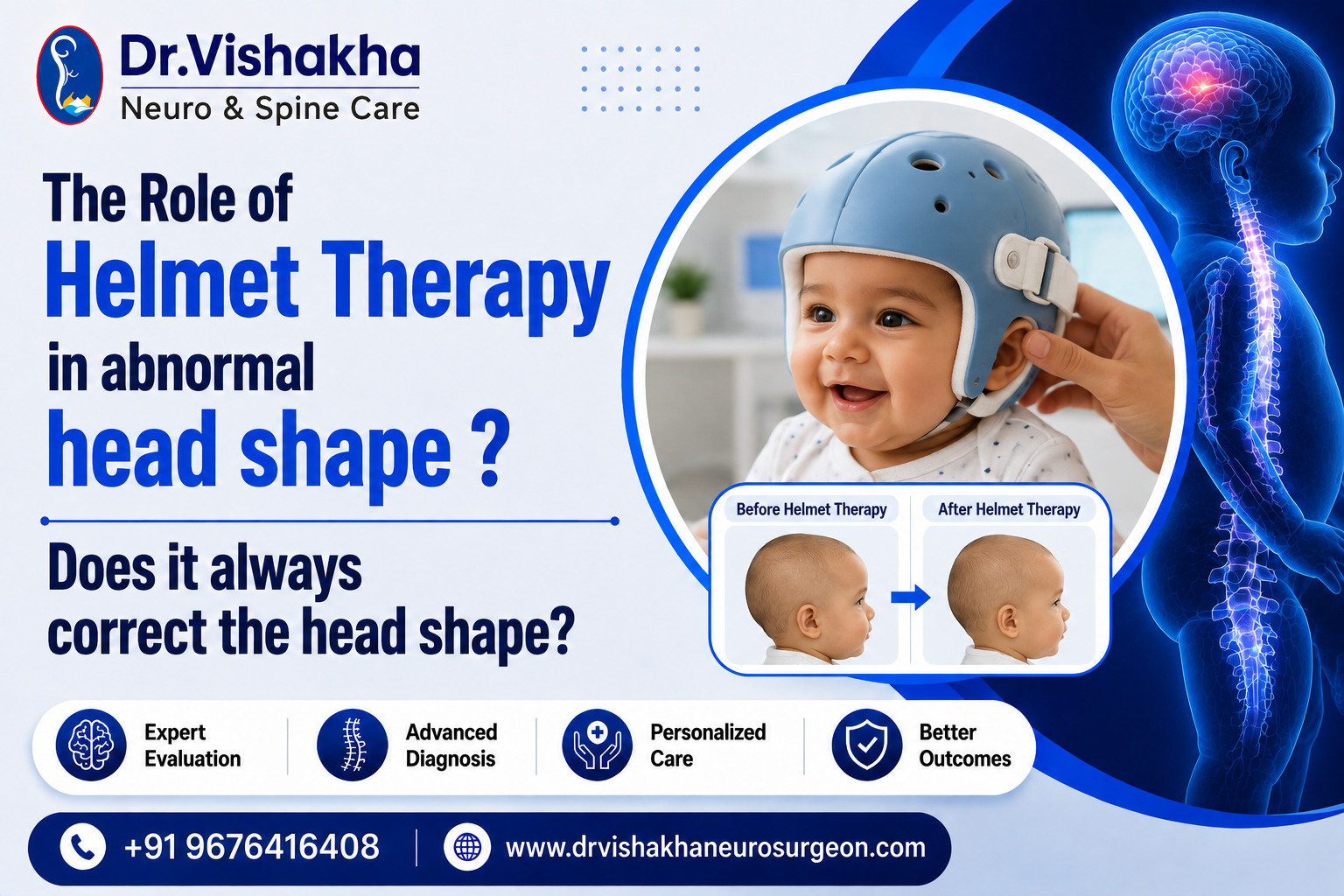
Imagine this. Your baby is a few months old. You’re picking them up from the crib one morning, and you notice something you hadn’t seen before. One side of their head looks a little flatter than the other. Your heart skips a beat. Is this something serious? Will it go away on its own? Does my baby need treatment?
Many parents go through this exact moment, and it’s completely normal to feel unsure about what it means or what to do next. This is where helmet therapy for babies comes in as a possible answer. In this article, we’ll explain what it is, how it works, when it’s needed, and whether it always fixes the head shape completely.
Understanding Helmet Therapy?
Helmet therapy is a simple, non-surgical treatment. It uses a specially made, lightweight helmet to gently guide the shape of a baby’s skull as it grows.
Here’s an easy way to picture it. A baby’s skull is soft and still growing, especially in the first year of life. The helmet doesn’t push or force the head into a new shape. Instead, it gives the flatter areas of the head extra room to grow, while gently limiting growth in the areas that are already rounded. Over time, this helps even out the shape.
Because babies grow so fast in the first year, this is the best window for infant helmet therapy to work well.
Why Do Some Babies Need Helmet Therapy?
An abnormal head shape in babies is more common than most parents realise. A newborn’s skull is soft and flexible. This is helpful during birth, but it also means the head can change shape easily from outside pressure, even after delivery.
Here are some common reasons this happens:
- Babies spending a lot of time lying in the same position, especially while sleeping on their backs
- Limited space in the womb during pregnancy, such as with twins or a breech position
- Tight neck muscles that make a baby prefer turning their head to one side
- Premature birth, where the skull bones are even softer than usual
In most cases, this flattening is simply due to pressure and position. It does not affect the brain in any way, and it does not cause pain. But it can be noticeable, especially when looking at the baby’s head from above. That’s why many parents want to address it early, rather than wait and hope it corrects itself.
What Conditions Can Helmet Therapy Treat?
Doctors use a few specific terms to describe different head shape patterns. Here’s a simple breakdown:
| Condition | What It Looks Like | Common Cause |
| Positional Plagiocephaly | Flattening on one side, with the ear sometimes pushed slightly forward | Repeated pressure from sleeping position |
| Brachycephaly | Flattening across the back of the head, making it look shorter and wider | Long periods spent lying flat on the back |
| Mixed Plagiocephaly-Brachycephaly | A combination of both patterns | Pressure from more than one direction |
Positional plagiocephaly treatment and brachycephaly correction are the two most common reasons doctors recommend helmet fitting.
It’s important to know that these conditions are different from craniosynostosis. This is a condition where the joints (called sutures) in a baby’s skull fuse together too early. Craniosynostosis is a structural problem, not a positional one, and it needs a different kind of treatment. We’ll explain more about this further below.
How Does Helmet Therapy Work?
The process is simple and follows clear steps:
- Assessment and measurement – A specialist examines the baby’s head shape closely. Sometimes, a 3D scan is used to map out exactly where the flattening is.
- Custom helmet made – The helmet is built specifically to match that baby’s head. It is never a one-size-fits-all device.
- Fitting – The helmet is fitted snugly, with small gaps left over the flatter areas so there’s room for the head to grow into that space.
- Regular check-ins – Every one to two weeks, the doctor checks progress and adjusts the helmet as the head shape changes.
- Daily wear – Most babies wear the helmet for around 22 to 23 hours a day, taking it off only for baths.
It may sound like a big commitment at first. But most babies get used to it within just a few days. Many parents say it becomes part of the daily routine much faster than they expected.
When Is Helmet Therapy Recommended?
Timing plays a big role in how well helmet therapy works. A baby’s skull grows fastest in the first six months of life. This means starting treatment early often leads to faster results and a shorter total treatment time.
Doctors usually recommend helmet therapy when:
- The flattening is moderate to severe, not just mild
- Repositioning and tummy time haven’t improved the shape by four to six months of age
- The shape is affecting how the ears or face line up
- Parents want a more structured, predictable way to correct the shape
Waiting longer doesn’t mean treatment becomes impossible. But the skull bones become firmer over time, so treatment may need to continue for longer to achieve the same result.
Does Helmet Therapy Always Correct the Head Shape?
This is the question most parents really want answered. And it deserves an honest answer: not always completely, but it helps the vast majority of babies significantly.
Here’s what helmet therapy reliably does:
- Improves the overall symmetry of the head in most babies who use it
- Helps correct ear and facial alignment in many cases
- Works best when started early and worn consistently, as instructed
Here’s what it may not always do:
- Achieve a perfectly symmetrical, textbook head shape in every single case
- Fully correct very severe flattening, especially if treatment starts later
Some babies may be left with a small amount of asymmetry after treatment. In most cases, this is subtle and only noticeable to a trained eye, not something that stands out in everyday life.
Factors That Affect Helmet Therapy Results
A few key things influence how well the treatment works:
- Age when treatment starts – Earlier is almost always better, since skull bones firm up quickly after the first year.
- How severe the flattening is – Mild cases respond faster than more noticeable ones.
- How consistently the helmet is worn – Taking it off too often slows down progress.
- The actual cause behind it – Positional flattening responds much better than structural conditions.
- Regular follow-up visits – These help the helmet keep pace with the baby’s growth.
Parents who stick to the wear schedule and attend every follow-up appointment tend to see the best, most reliable results.
When Is Surgery Needed Instead of Helmet Therapy?
Helmet therapy does not treat craniosynostosis. If the sutures in a baby’s skull have already fused too early, gentle pressure from a helmet cannot create space for the brain to grow properly. In these cases, surgery is the right treatment, not a helmet.
Here are some signs that may point to a structural issue rather than a positional one:
- A firm ridge that can be felt along one of the skull’s suture lines
- A head shape that isn’t improving, or is getting worse, despite repositioning
- An unusual head shape that was present very early, sometimes even at birth
- Growth of the skull that seems restricted in one particular direction
If you notice any of these signs, it’s important to see a pediatric neurosurgeon as soon as possible. Craniosynostosis surgery is far more time-sensitive than positional head shape correction. Early diagnosis allows for simpler surgical options and much better long-term results.
FAQs
- At what age should helmet therapy begin?
Most specialists recommend starting between four and six months of age, though it can begin earlier or later depending on how severe the flattening is.
- How long does a baby need to wear the helmet?
This varies from baby to baby, but most wear it for about three to six months, depending on their age and how severe the flattening was at the start.
- Is helmet therapy painful for babies?
No. It applies gentle, steady pressure, and most babies adjust comfortably within the first week.
- Can I fix my baby’s flat head without a helmet?
Mild cases often improve with repositioning and supervised tummy time. Moderate to severe cases usually need helmet therapy for a fuller correction.
- Does a flat head shape affect brain development?
No. Positional flattening is a shape issue, not a brain issue. It does not affect how the brain grows or functions.
- How can I tell if it’s plagiocephaly or craniosynostosis?
A specialist examination, sometimes with imaging, can tell the difference clearly. Craniosynostosis often shows a firm ridge along the suture line and does not improve with repositioning.
- Is helmet therapy covered by insurance?
This depends on your insurance provider and policy. It’s best to check directly with them about coverage for cranial remolding devices.
Proficiency of Dr Vishakha – Neurosurgeries Expertise
Hydrocephalus (increased fluid in the brain): The procedure involves an endoscopic third ventriculostomy and CSF diversion (VP shunt) to treat complex hydrocephalus.
Craniosynostosis (abnormal head shape due to premature cranial suture fusion) surgeries: Helmet therapy is a technique that is used in both endoscopic and open surgery.
Spinal dysraphisms(Spina Bifida)– (spinal abnormalities present by birth) – surgical repair
Encephalocele repair surgery.
Vascular conditions and stroke surgeries: revascularisation surgeries for moyamoya disease.
Pediatric brain and spine tumour surgeries.
Pediatric brain and spine infection surgeries: Endoscopic and open surgeries for brain and spine infections.
Pediatric traumatic brain and spinal injury.
Antenatal counselling for congenital fatal neurosurgical conditions.
Conclusion
An abnormal head shape in babies is one of the more visible worries new parents face. The good news is that it’s also one of the most manageable, especially when caught and treated early. Helmet therapy for babies offers a safe, non-surgical way to support healthy baby skull development. While it may not create perfect symmetry in every single case, it makes a real, visible difference for most babies who wear it consistently. And if the cause turns out to be structural rather than positional, timely care from a specialist ensures your child still gets exactly the treatment they need.
Related Links
Related treatment pages:
- Craniosynostosis: https://drvishakhaneurosurgeon.com/craniosynostosis/
- Pediatric Neurosurgery: https://drvishakhaneurosurgeon.com/pediatric-neurosurgery/
- Hydrocephalus: https://drvishakhaneurosurgeon.com/hydrocephalus/
- Antenatal Counselling: https://drvishakhaneurosurgeon.com/antenatal-counselling/
Other blog posts:
- Spina Bifida Journey: From Antenatal Diagnosis to Postnatal Repair: https://drvishakhaneurosurgeon.com/spina-bifida-journey-from-antenatal-diagnosis-to-postnatal-repair/
- Understanding Your Baby’s Milestones: How Brain & Spine Health Plays a Crucial Role: https://drvishakhaneurosurgeon.com/understanding-your-babys-milestones-how-brain-spine-health-plays-a-crucial-role-dr-vishakha/
- Is Your Baby’s Soft Spot Normal? Here’s How to Tell: https://drvishakhaneurosurgeon.com/is-your-babys-soft-spot-normal-heres-how-to-tell-dr-vishakha-explains/
Book a Consultation
If you’ve noticed an uneven head shape in your baby, or you’re unsure whether repositioning, helmet therapy, or a surgical evaluation is the right next step, don’t wait for the concern to grow. Book a consultation with Dr Vishakha, one of Hyderabad’s leading pediatric neurosurgeons, at +91 8618978597 or +91 9676416408, or visit drvishakhaneurosurgeon.com to schedule your appointment today.