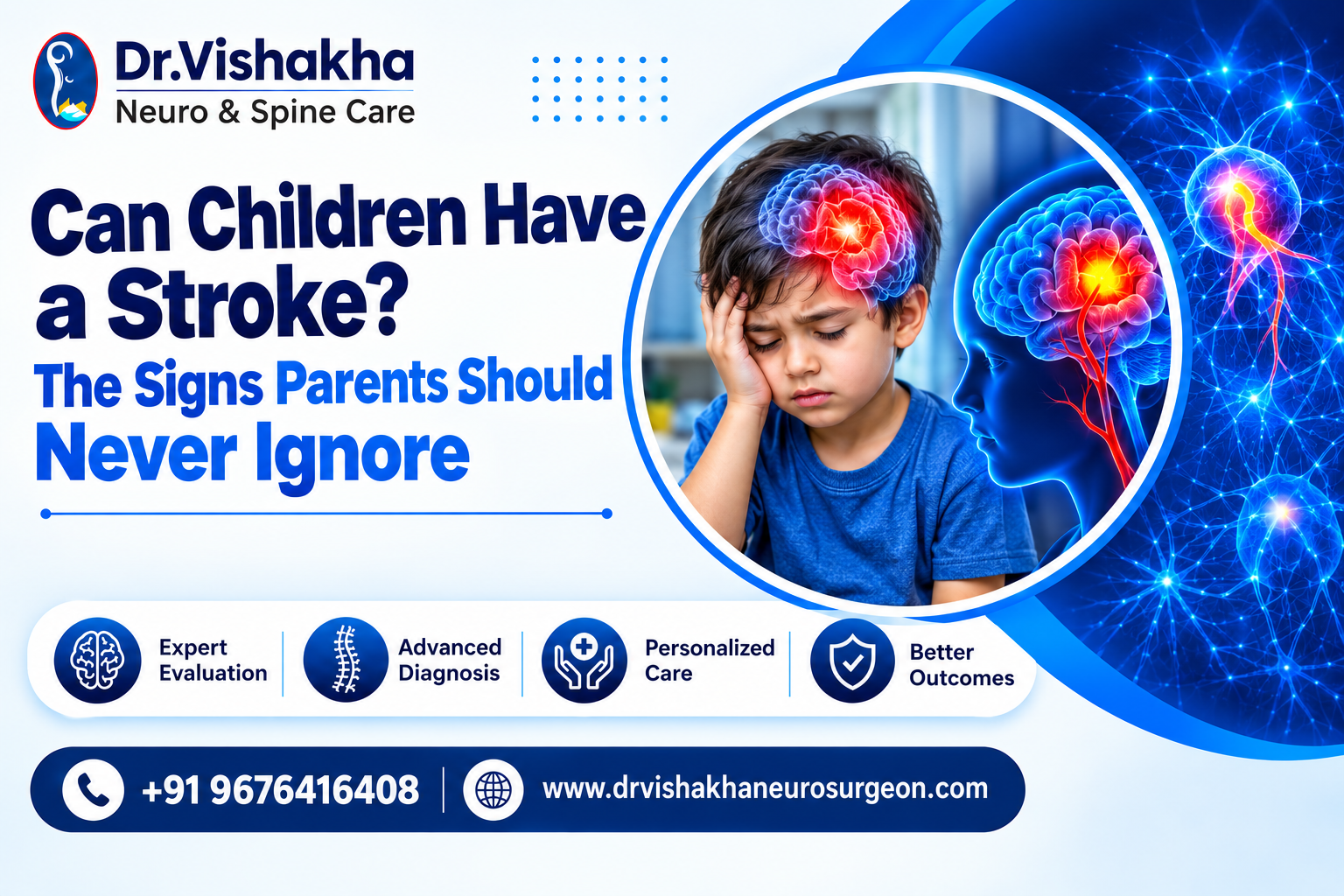
Every year, many families hear a diagnosis they never expected: their child has had a stroke. For most parents, it comes as a complete surprise, because stroke is widely seen as a condition of later life. The reality is that pediatric stroke in children is a recognised medical emergency, and it can happen at any age, even before birth.
Awareness is the first step towards protecting a child. This guide covers the essentials, from how a stroke is recognised to the treatment and support available afterwards.
Quick Answer Summary
Yes, children can have a stroke. Pediatric stroke in children occurs when blood flow to part of the brain is blocked or when a blood vessel in the brain bursts. It can affect newborns, toddlers, and teenagers. Warning signs include sudden weakness on one side of the body, facial drooping, slurred speech, severe headache, seizures, and difficulty walking or seeing. Common causes include heart conditions, infections, blood disorders, and moyamoya disease. A stroke in a child is a medical emergency that needs immediate care at a hospital with pediatric neurology and neurosurgery services
What Is a Stroke in Children?
Brain cells need a steady supply of oxygen and nutrients to work. When that supply stops, even for a few minutes, the affected cells begin to get damaged. The area of the brain involved decides what the child loses, whether it is movement, speech, vision, or balance.
Pediatric stroke in children is less common than stroke in adults, affecting roughly 2 to 13 children per 100,000 each year. Yet the impact can be lifelong, which is why early diagnosis matters so much.
Age plays an important role. Strokes in childhood tend to cluster in two groups:
| Age Group | What Doctors Call It | Key Point |
| Late pregnancy to 28 days after birth | Perinatal or neonatal stroke | The highest-risk period in all of childhood |
| One month to 18 years | Childhood stroke | Usually linked to an underlying health condition |
This often leads parents to ask, can babies have a stroke? Yes. In fact, newborns face a higher risk than older children, because the birth process places sudden stress on the baby’s blood vessels and clotting system.
Causes: Why Do These Happen?
In adults, strokes are usually linked to long-term factors such as high blood pressure, smoking, or high cholesterol. In children, the causes are quite different.
Common Causes
- Heart conditions: Congenital heart defects can allow small clots to travel to the brain.
- Blood disorders: Sickle cell disease and clotting disorders increase the risk of blockages.
- Infections: Meningitis, chickenpox, and severe ear or sinus infections can inflame blood vessels.
- Arteriopathy: Abnormal or narrowed arteries, including moyamoya disease.
- Head or neck injuries: Trauma can damage the lining of a blood vessel.
- Severe dehydration: Prolonged vomiting or diarrhoea can thicken the blood.
Causes in Newborns
The causes of stroke in newborns are often related to pregnancy and delivery. These may include clots from the placenta, complications during birth, maternal infection, or reduced oxygen supply during labour. In some cases, no single cause is identified.
Why It’s Called a “Silent Brain Attack”
Young children often cannot describe what they are feeling. A baby cannot report numbness, and a toddler may not be able to explain a headache. Strokes in children are also rarely painful in an obvious way.
As a result, the signs can go unnoticed. In some cases, a stroke is only suspected months later, when a baby shows a strong preference for one hand. This is why stroke in children is often described as a silent brain attack. Studies indicate that diagnosis in children is frequently delayed by more than 24 hours.
Types of Stroke
| Type | What Happens | Occurrence in Children |
| Ischemic stroke | A clot or narrowed artery blocks blood flow | Most common, about half of cases |
| Hemorrhagic stroke | A blood vessel ruptures and bleeds into the brain | Nearly half of cases, higher proportion than in adults |
| Perinatal stroke | Occurs between 20 weeks of pregnancy and 28 days after birth | Highest-risk age group |
| Cerebral sinovenous thrombosis | A clot forms in the veins that drain blood from the brain | Less common, often linked to infection or dehydration |
Early Warning Signs Parents Should Never Ignore
The BE FAST Guide
Doctors recommend a simple checklist. The BE FAST stroke signs kids may show are:
- B – Balance: Sudden unsteadiness, falls, or loss of coordination
- E – Eyes: Blurred vision, double vision, or loss of vision in one eye
- F – Face: Drooping on one side of the face, especially when smiling
- A – Arms: Sudden weakness or numbness in one arm or leg
- S – Speech: Slurred speech, confusion, or difficulty understanding
- T – Time: Seek emergency help immediately
Other Childhood Stroke Symptoms
In addition to the BE FAST signs, the following childhood stroke symptoms require urgent attention:
- A sudden, severe headache
- Seizures, particularly affecting one side of the body
- Unusual drowsiness or difficulty waking
- Vomiting accompanied by headache
Signs in Babies and Toddlers
Younger children may present differently. Common signs of stroke in toddlers and infants include:
- Seizures in the first few days of life
- Consistent use of only one hand before 12 months of age
- Poor feeding or unusual floppiness
- Sudden loss of skills such as crawling or walking
Important: If a child’s behaviour or movement changes suddenly and without explanation, it is always appropriate to seek medical evaluation.
Conditions We Often See
Some conditions linked to stroke are seen frequently in pediatric neurosurgery practice:
- Moyamoya disease: Progressive narrowing of the brain’s major arteries, which can lead to repeated mini-strokes.
- Arteriovenous malformations (AVMs): Abnormal tangles of blood vessels that may bleed.
- Cavernomas: Clusters of weak blood vessels prone to leakage.
- Aneurysms: Weakened, bulging areas in an artery wall, rare but serious in children.
- Sickle cell disease: A blood disorder that significantly raises stroke risk without regular monitoring.
What Happens Next?
Diagnosis
Doctors typically use an MRI or CT scan to assess the brain. Blood tests, an echocardiogram (heart ultrasound), and sometimes an angiogram help identify the underlying cause.
Treatment
Treatment depends on the type and cause of the stroke, and may include:
- Blood-thinning medicines to prevent further clotting
- Surgery to relieve pressure or repair a bleeding vessel
- Revascularisation surgery for moyamoya disease, which creates new pathways for blood to reach the brain
Recovery
A child’s brain has a strong capacity to adapt, known as neuroplasticity. Healthy areas of the brain can often take over functions from damaged areas. Pediatric stroke recovery usually involves:
- Physiotherapy to rebuild movement and strength
- Occupational therapy for daily activities
- Speech and language therapy
- Educational and emotional support
Each child’s pediatric stroke recovery follows its own timeline. Some children improve within months, while others need longer-term support. Early intervention and consistent therapy lead to the best outcomes.
Questions to Ask Your Specialist
Preparing questions in advance can help families make informed decisions:
- What type of stroke did my child have?
- What caused it, and is there a risk of recurrence?
- Is surgery needed, or can the condition be managed with medicines?
- Which therapies should begin, and when?
- Are there any activities my child should avoid?
- Which symptoms should prompt an immediate return to hospital?
- How might this affect my child’s learning and schooling?
Frequently Asked Questions
1. Can babies have a stroke before they are born?
Yes. Can babies have a stroke in the womb? It can happen, most often in the later stages of pregnancy. It may only be detected after birth through seizures or weakness on one side.
2. How common is pediatric stroke in children?
Pediatric stroke in children is uncommon, but it is among the top ten causes of death in children. It occurs more often than many parents realise.
3. What are the most common signs of stroke in toddlers?
The key signs of stroke in toddlers include sudden one-sided weakness, facial drooping, loss of balance, seizures, and unusual drowsiness.
4. What are the main causes of stroke in newborns?
The most common causes of stroke in newborns include clotting disorders, placental problems, infections, and complications during delivery.
5. How can parents remember the BE FAST stroke signs kids show?
The BE FAST stroke signs kids show can be remembered as: Balance, Eyes, Face, Arms, Speech, and Time.
6. Can a child fully recover from a stroke?
Many children make a good recovery due to the adaptability of the developing brain. Early treatment and regular therapy are key.
7. Are childhood stroke symptoms different from adult symptoms?
They are largely similar, but childhood stroke symptoms more often include seizures and headaches. Infants may show only subtle changes, such as poor feeding.
Conclusion
Stroke in childhood is uncommon, but it is a serious condition that requires prompt attention. Pediatric stroke in children often presents with subtle signs, such as one-sided weakness, facial drooping, or a sudden seizure. Early recognition and timely treatment give a child the best chance of recovery.
Parents play a vital role. Knowing the warning signs, acting quickly, and seeking specialist care can protect a child’s long-term health and development.
Proficiency of Dr Vishakha – Neurosurgeries Expertise
Hydrocephalus (increased fluid in the brain): The procedure involves an endoscopic third ventriculostomy and CSF diversion (VP shunt) to treat complex hydrocephalus.
Craniosynostosis (abnormal head shape due to premature cranial suture fusion) surgeries: Helmet therapy is a technique that is used in both endoscopic and open surgery.
Spinal dysraphisms(Spina Bifida)– (spinal abnormalities present by birth) – surgical repair
Encephalocele repair surgery.
Vascular conditions and stroke surgeries: revascularisation surgeries for moyamoya disease.
Pediatric brain and spine tumour surgeries.
Pediatric brain and spine infection surgeries: Endoscopic and open surgeries for brain and spine infections.
Pediatric traumatic brain and spinal injury.
Antenatal counselling for congenital fatal neurosurgical conditions.
Related Links
Related treatment pages:
- Craniosynostosis: https://drvishakhaneurosurgeon.com/craniosynostosis/
- Pediatric Neurosurgery: https://drvishakhaneurosurgeon.com/pediatric-neurosurgery/
- Hydrocephalus: https://drvishakhaneurosurgeon.com/hydrocephalus/
- Antenatal Counselling: https://drvishakhaneurosurgeon.com/antenatal-counselling/
Other blog posts:
- Spina Bifida Journey: From Antenatal Diagnosis to Postnatal Repair: https://drvishakhaneurosurgeon.com/spina-bifida-journey-from-antenatal-diagnosis-to-postnatal-repair/
- Understanding Your Baby’s Milestones: How Brain & Spine Health Plays a Crucial Role: https://drvishakhaneurosurgeon.com/understanding-your-babys-milestones-how-brain-spine-health-plays-a-crucial-role-dr-vishakha/
- Is Your Baby’s Soft Spot Normal? Here’s How to Tell: https://drvishakhaneurosurgeon.com/is-your-babys-soft-spot-normal-heres-how-to-tell-dr-vishakha-explains/
Book a Consultation
If your child has shown any of these warning signs, or has a condition that increases stroke risk, an early expert evaluation is essential.
Book a consultation with Dr. Vishakha Karpe today — call +91 8618978597 or +91 9676416408, or visit drvishakhaneurosurgeon.com to schedule your visit.