
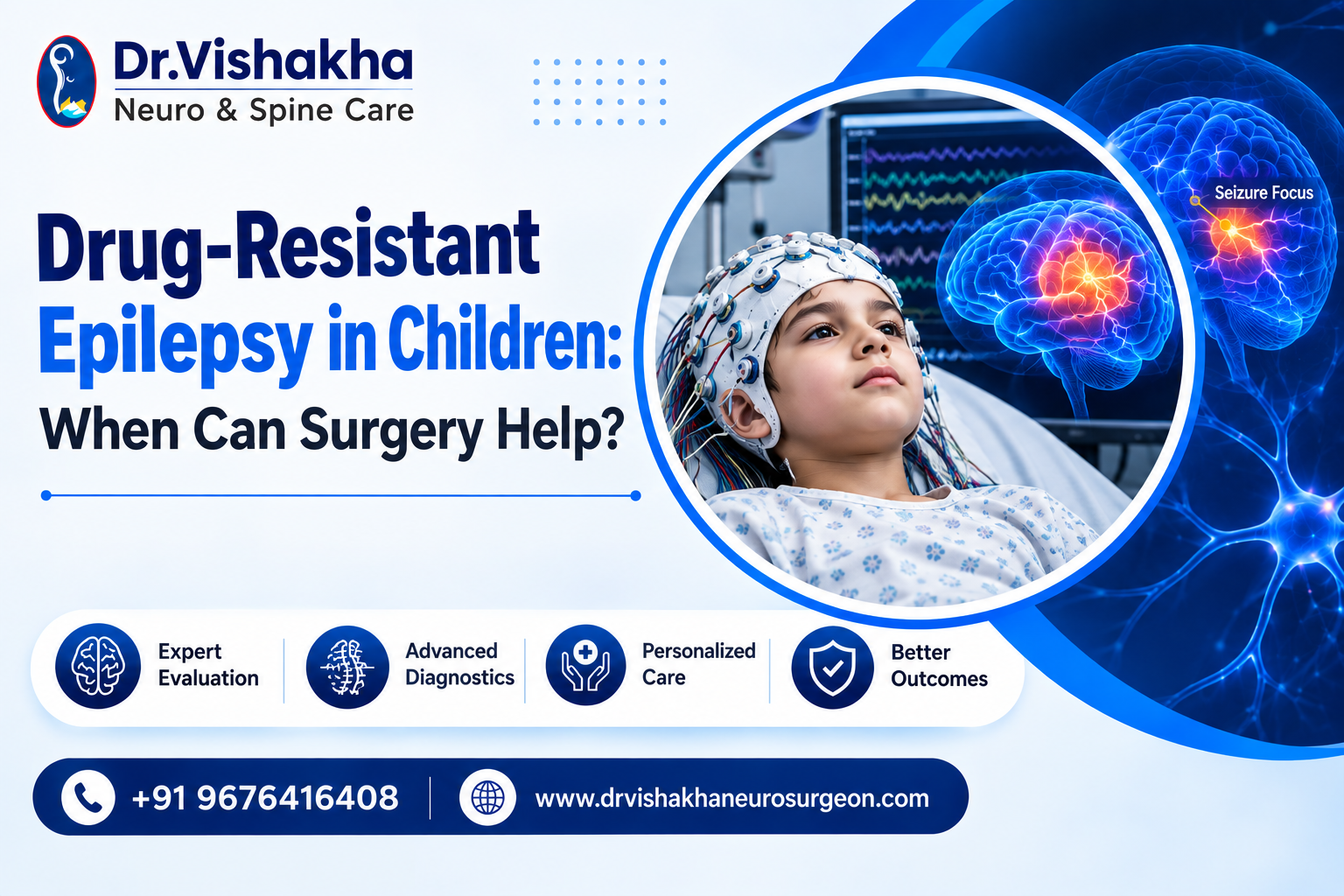
When a child’s seizures don’t respond to two or more properly tried medications, doctors call this drug-resistant epilepsy, and this is when epilepsy surgery enters the conversation. It isn’t the first option, but for many children, it becomes a life-changing one. Surgery works by identifying the exact area of the brain triggering seizures and removing or disconnecting it, often reducing or completely stopping seizure activity. Alongside surgery, Pediatric Epilepsy Treatments may also include dietary therapy, nerve stimulation, or adjusted medication combinations.
The goal is always the same: fewer seizures, better development, and a childhood that isn’t ruled by unpredictability.
Understanding the Condition
A child experiencing a seizure is distressing for any parent to witness — the sudden loss of control, the disorientation afterwards, and the uncertainty of when it might happen again. This uncertainty is often what weighs on families the most.
Most children with epilepsy achieve good seizure control with medication. Antiepileptic drugs work by regulating the abnormal electrical activity in the brain that causes seizures, restoring more typical neuronal signalling. For the majority of children, an appropriately chosen drug at the correct dose achieves this effectively.
However, this is not always the case, and there are specific clinical reasons why. In some children, seizures originate from a defined structural abnormality such as scar tissue or a localised malformation, and medication cannot correct this underlying physical source, even if it reduces surrounding electrical activity. In others, the seizure network extends across a wider area of the brain than a single drug mechanism can adequately control, meaning that switching between medications with different mechanisms of action still fails to achieve control. In certain cases, the seizure pathway itself does not respond well to any currently available drug class.
This is precisely why epilepsy surgery is not considered a last-resort measure, but rather a carefully evaluated treatment option once it becomes clear that the seizures are driven by a cause medication is not designed to address.
It is also worth noting that prolonged, uncontrolled seizures can affect a child’s memory, learning, and behavioural development over time. This is why early recognition of drug resistance rather than years of incremental medication adjustments plays an important role in achieving better long-term outcomes.
Why Do These Happen?
Epilepsy in children rarely has one single cause. It’s more like a puzzle with several possible pieces:
- Structural brain abnormalities — malformations present from birth, such as cortical dysplasia, that create abnormal electrical activity
- Genetic factors — certain gene mutations directly affect how brain cells communicate
- Scar tissue — from earlier infections, birth injury, or reduced oxygen at birth
- Tumours — small, often benign growths that irritate surrounding brain tissue
- Unknown origin — in some children, despite thorough testing, no clear cause is ever found
This last category can be particularly frustrating for families. Not having an answer doesn’t mean nothing can be done, though. It simply means treatment decisions rely more heavily on how the seizures behave and respond, rather than on a single identified cause.
Types
Not all seizures look alike, and not all epilepsy behaves the same way. Broadly, pediatric epilepsy falls into a few recognisable patterns:
| Type | What It Looks Like |
| Focal epilepsy | Seizures start in one specific brain region; may or may not spread |
| Generalized epilepsy | Abnormal activity involves both sides of the brain from the onset |
| Epileptic encephalopathies | Frequent seizures alongside developmental regression |
| Lesional epilepsy | Seizures linked to a visible structural cause on imaging |
| Non-lesional epilepsy | Seizures occur despite normal-appearing imaging |
Focal, lesional epilepsy tends to respond particularly well to surgery, since the seizure source can often be precisely located and addressed. Generalised or non-lesional cases require more extensive evaluation before surgery can even be considered.
Conditions We Often See
In everyday practice, certain seizure-causing conditions show up repeatedly among children referred for surgical evaluation:
- Focal cortical dysplasia — localised areas of abnormal brain development
- Mesial temporal sclerosis — scarring within the temporal lobe, often linked to early febrile seizures
- Hypothalamic hamartoma — a rare growth associated with distinctive seizure patterns
- Tuberous sclerosis — a genetic condition causing multiple small brain lesions
- Rasmussen’s encephalitis — a rare, progressive condition affecting one side of the brain
Before surgery is ever discussed, most children go through a thorough medication trial first. This typically means testing appropriate options from the pediatric seizure medications list, adjusted carefully by dose and combination, to see whether seizures can be controlled without surgical intervention.
What Happens Next?
If seizures continue despite trying appropriate antiepileptic drugs in paediatrics, the next step is a structured pre-surgical evaluation. This isn’t a single test; it’s a whole process:
- Video EEG monitoring — recording brain activity during actual seizures to pinpoint their origin
- MRI imaging — checking for any structural cause
- Neuropsychological assessment — understanding how seizures are affecting memory, attention, and learning
- Additional functional imaging — sometimes needed when the seizure source isn’t immediately obvious
Only after this complete picture comes together does the surgical team decide whether epilepsy surgery is appropriate, and if so, what type, whether that’s removing a small area of abnormal tissue, disconnecting pathways, or in select cases, more extensive procedures.
Recovery after surgery varies by procedure type, but many children experience a noticeable drop in seizure frequency within weeks to months. Some become seizure-free entirely. Follow-up monitoring, sometimes alongside continued medication for a period, remains part of the plan.
Questions to Ask Your Specialist
It’s completely natural to feel unsure about what to ask during a consultation. Here are a few starting points:
- Has my child’s epilepsy been formally confirmed as drug-resistant?
- What does the video EEG and MRI show about the seizure source?
- Am I a candidate for surgery, or should other Pediatric Epilepsy Treatments be tried first?
- What are the realistic chances of seizure freedom with this specific case?
- What risks come with the type of surgery being suggested?
Bringing a written list to your appointment isn’t a sign of being “that parent.” It’s simply good preparation.
FAQs
- What counts as drug-resistant epilepsy in children?
When seizures continue despite trying two appropriate, correctly dosed medications, doctors typically classify the condition as drug-resistant. - Is epilepsy surgery safe for children?
Yes, when performed after thorough evaluation by an experienced team, surgery carries a well-established safety profile, with risks discussed individually for each child. - Will my child need to continue medication after surgery?
Many children do continue medication for some time after surgery, though doses are often reduced gradually under specialist guidance. - How long does recovery from epilepsy surgery take?
Hospital stays typically range from a few days to a week, with fuller recovery and seizure-outcome assessment over the following months. - Are there non-surgical options if surgery isn’t suitable?
Yes — options such as the ketogenic diet, vagus nerve stimulation, and newer medication combinations remain valuable alternatives. - At what age can children undergo epilepsy surgery?
Surgery can be considered at nearly any age, including infancy, when clearly indicated, age alone isn’t a barrier when the benefits outweigh the risks.
Conclusion
Drug-resistant epilepsy can feel like an uphill climb, especially when medications alone aren’t giving your child the relief you were hoping for. But it’s worth knowing this clearly: epilepsy surgery has helped countless children reduce or even stop their seizures altogether, often opening the door to better learning, mood, and quality of life. Combined with the right Pediatric Epilepsy Treatments and thoughtful, ongoing evaluation, there is real hope beyond the medication list and the right specialist can help you find it.
Proficiency of Dr Vishakha – Neurosurgeries Expertise
Hydrocephalus (increased fluid in the brain): The procedure involves an endoscopic third ventriculostomy and CSF diversion (VP shunt) to treat complex hydrocephalus.
Craniosynostosis (abnormal head shape due to premature cranial suture fusion) surgeries: Helmet therapy is a technique that is used in both endoscopic and open surgery.
Spinal dysraphisms(Spina Bifida)– (spinal abnormalities present by birth) – surgical repair
Encephalocele repair surgery.
Vascular conditions and stroke surgeries: revascularisation surgeries for moyamoya disease.
Pediatric brain and spine tumour surgeries.
Pediatric brain and spine infection surgeries: Endoscopic and open surgeries for brain and spine infections.
Pediatric traumatic brain and spinal injury.
Antenatal counselling for congenital fatal neurosurgical conditions.
Related Links
Related treatment pages:
- Craniosynostosis: https://drvishakhaneurosurgeon.com/craniosynostosis/
- Pediatric Neurosurgery: https://drvishakhaneurosurgeon.com/pediatric-neurosurgery/
- Hydrocephalus: https://drvishakhaneurosurgeon.com/hydrocephalus/
- Antenatal Counselling: https://drvishakhaneurosurgeon.com/antenatal-counselling/
Other blog posts:
- Spina Bifida Journey: From Antenatal Diagnosis to Postnatal Repair: https://drvishakhaneurosurgeon.com/spina-bifida-journey-from-antenatal-diagnosis-to-postnatal-repair/
- Understanding Your Baby’s Milestones: How Brain & Spine Health Plays a Crucial Role: https://drvishakhaneurosurgeon.com/understanding-your-babys-milestones-how-brain-spine-health-plays-a-crucial-role-dr-vishakha/
- Is Your Baby’s Soft Spot Normal? Here’s How to Tell: https://drvishakhaneurosurgeon.com/is-your-babys-soft-spot-normal-heres-how-to-tell-dr-vishakha-explains/
Book a Consultation
If your child’s seizures haven’t responded to medication, don’t wait to explore what else is possible.
Book a consultation with Dr. Vishakha Karpe today — call +91 8618978597 or +91 9676416408, or visit drvishakhaneurosurgeon.com to schedule your visit.